Of all things, love is the most potent.

Maria Montessori

Blog

Musings on a variety of topics.

  • Caterpillar Observation (Part II)

    Caterpillar Observation (Part II)

    “There is nothing in a caterpillar that tells you it’s going to be a butterfly.” — Buckminster Fuller

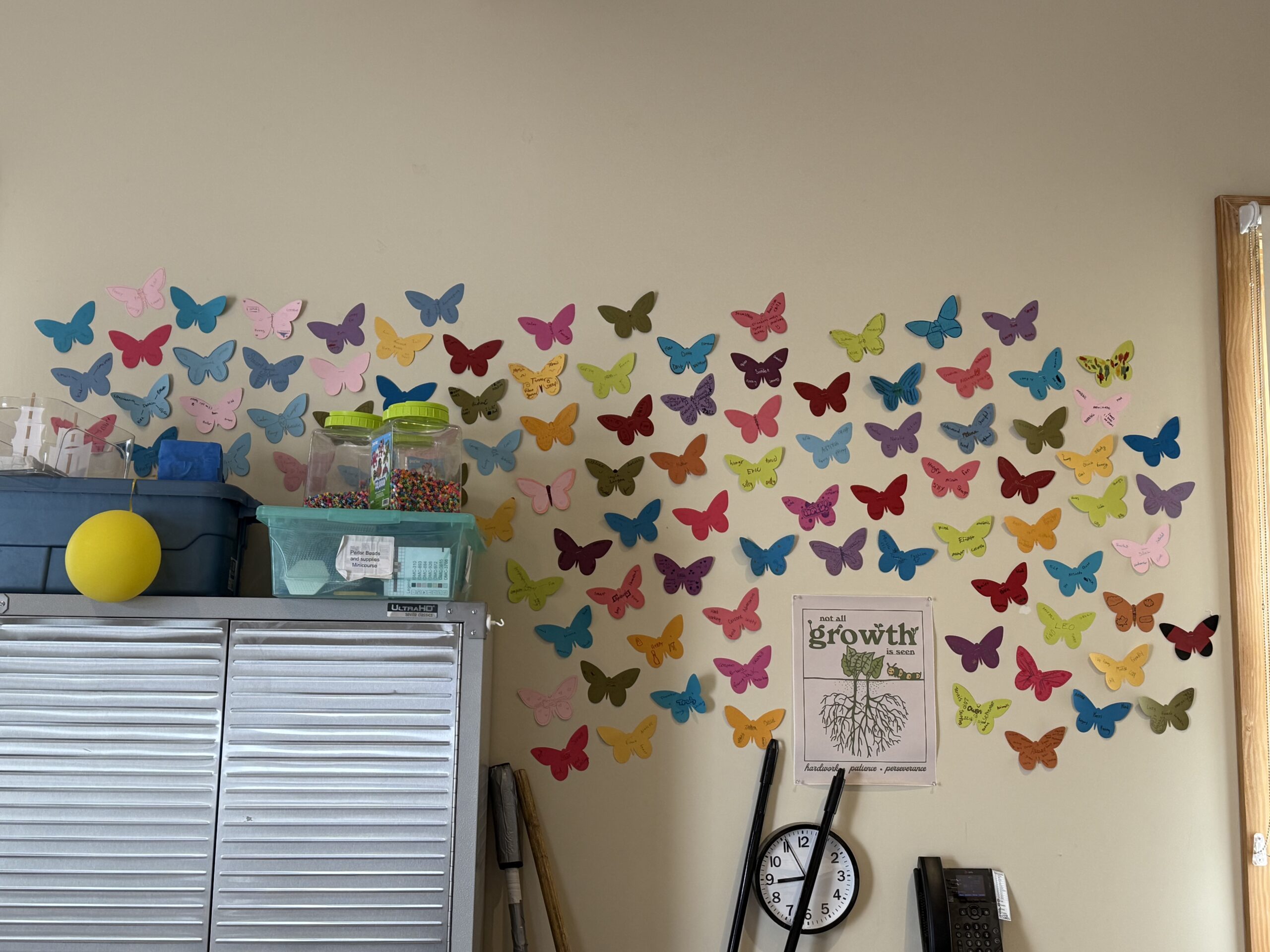
    A Montessori middle school teacher asked her students to write some of their strengths on paper butterflies. Then she hung a poster amid the butterflies with the words “Not all growth is seen,” above a caterpillar, leaves, and deep roots drawn above the words “hard work,” “patience,” and “perseverance.”

    This simple wall art brought to mind and caused me to question the Buckminster Fuller quote, “There is nothing in a caterpillar that tells you it’s going to be a butterfly.” These students — very much in the metamorphosis stage of adolescence, which Maria Montessori describes as the “social newborn” phase — seem to already know their butterfly beauty and wings ready to fly. Words like “artistic,” “kind,” “funny,” “sporty,” “cheerful,” “silly,” “fun” (and, yes, “hungry” like caterpillars) graced the wings of the paper butterflies.

    Maybe when we hear about adolescents suffering from higher rates of anxiety and depression than ever before, it’s in large part because adults have failed to understand the beauty and importance of this phase of development, not because the tweens and teens don’t know their own magnificence. Especially for butterflies, it’s hard to fly weighted down by the unrealistic expectations of a school system not designed for their fundamental needs and the resulting misunderstandings of the adults in their lives.

  • Caterpillar Observation (Part I)

    Caterpillar Observation (Part I)

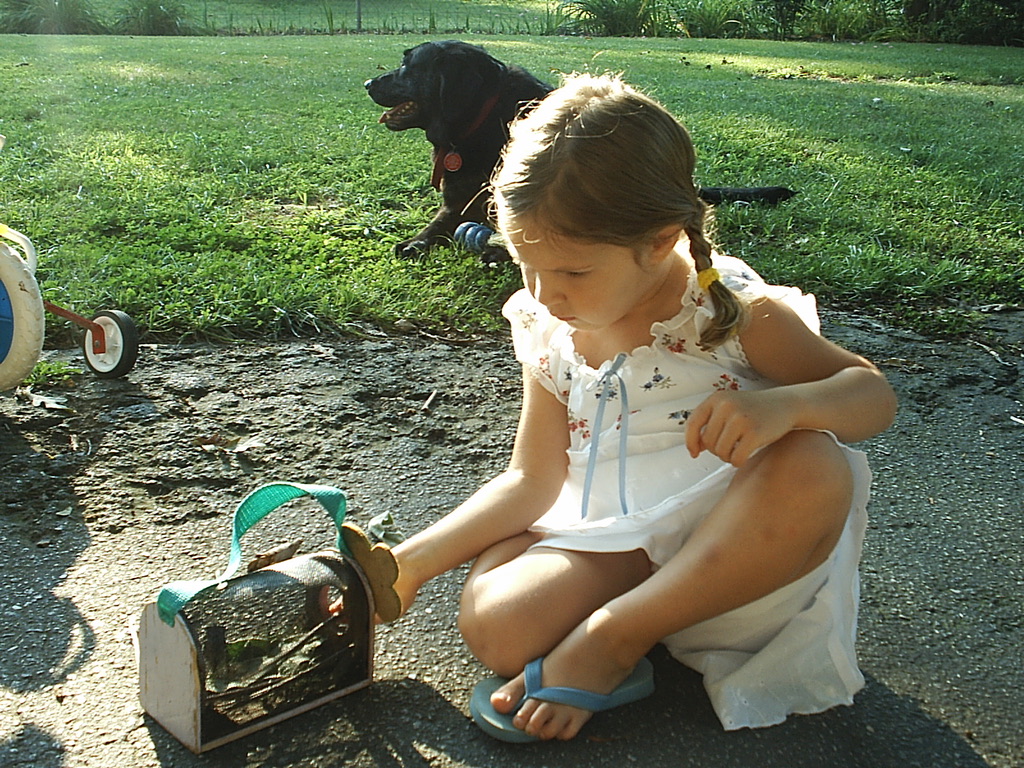
    My daughter loves caterpillars. During the height of caterpillar season, Elena insisted that we stop to look at every wriggly one when we went on walks. Her bug habitat was always kept near during this season, always prepared with sticks and leaves ready for the next friend. (She let them go after a time of observation.)

    Now in her 20s, I can still see that same intense look of caterpillar-inspired concentration in her eyes when she’s deeply interested in something. Did the caterpillars teach her that, or just bring out the intense wonder that’s been in her heart from the start?

    In Montessori environments, teachers and students are encouraged to learn the practice of observation. My guess is we’re just reminding each other to do what we already know. We’ve simply forgotten in the busy-ness of the modern world what it means to look deeply at another in wonder. We’re each other’s caterpillars. 🐛 ❤️

  • The Power of Walking

    The Power of Walking

    It’s debatable whether the Latin phrase “solvitur ambulando” (pronounced sol-vee-tur am-boo-lan-doh) means “the problem is solved by walking” or “the problem is solved by doing.”

    Either way, for me a lot of problems are indeed solved by walking. I walk after meals to help my food digest. I walk when I’m upset to clear my mind. I walk when I talk on the phone to give my body something to do while my mind is listening.

    In Montessori schools, guides often have the youngest students “walk the line” as a group when the room gets too discordant, or one student may walk the line balancing something like a glass of water on a tray to practice presence, slowing down, and concentration.

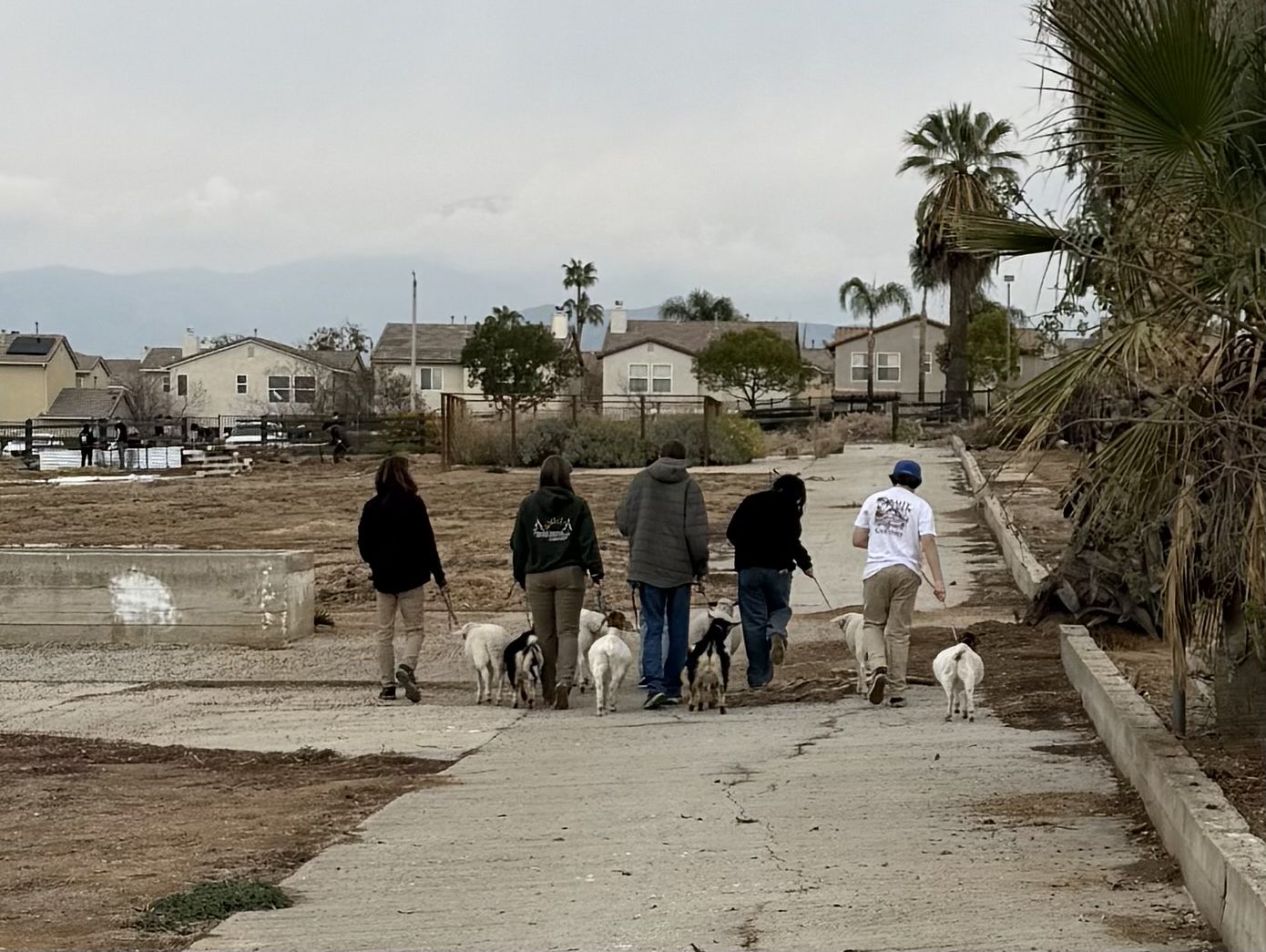
    Adolescents walking goats was one of the most joyful, sweet sights I’ve seen as I spent time observing at a Montessori middle and high school this year. This school is set within the heart of a city of 70,000 people, but these students have the opportunity to walk with the animals as part of the schools Erdkinder program, learning care for animals, harmony among a group of mammals sharing a path together, and the power of walking. Now that’s something to walk about.

    Takeaway: Go for a walk, solve a problem!

  • Interviews for inner-views

    Interviews for inner-views

    I am constantly in awe of the students I teach and observe at schools across the country and around the world. We’ve recently been discussing how to conduct interviews — oral histories, family interviews, expert interviews, and peer interviews — which essentially boils down to just two things:

    1. Be interested enough in another person’s life to ask them about it, and …
    2. Listen

    We listened to this recent awe-inspiring interview by a student who interviewed his firefighter dad about fighting the Los Angeles wildfires. I encourage you to listen, too. Then ask. Ask your family, your friends, experts (everyone is one about something), the person you’re standing next to in line. Then listen.

    As a bonus, for the most cherished people in your life, record the interviews. Use technology in a way that puts people at ease (kids and teens are great at this). Perhaps even share the experience with others (with your subject’s permission, of course). We need more people really asking and listening, sharing and learning about each other.

    Congratulations to Cian for recording this challenging moment in California’s history and for giving voice to the helpers, like his dad, who are making it bearable for others.

  • Inclusion = ❤️

    Inclusion = ❤️

    I have had the incredible gift of being part of the American Montessori Society’s Innovation Fellowship Think Tank for the past two years. The people I met in the Inclusion Workgroup have become some of my most treasured colleagues and friends. The theme of our group was Understand, Heal, and Belong — and that we did, together. Then we published our story in this month’s Montessori Life magazine. Check it out!

  • February Events

    February Events

    Sam Gleisten and I will be bringing our combined passion about and knowledge of AI, Digital Citizenship, and Montessori to the AIMS conference in Chicago Feb 21 and 22. Hope to see you there!

  • Winter Sunset, Utah

    Winter Sunset, Utah

    I love nature photography, particularly sunrises and sunsets. A few years ago, while experiencing a major life crisis I challenged myself to go outside and see the sun rise and sun set every day. My hope was that this morning and evening routine would remind me that the world keeps turning and the sun keeps shining, even on the most difficult days.

    It worked. I made it to 100 days of sunsets and 40 days of sunrises (sunrises are much more difficult with time changes and teaching exhaustion). Those sunrises and sunsets taught me to keep going, to keep shining, and to see the beauty in each day — regardless of what happened in between.

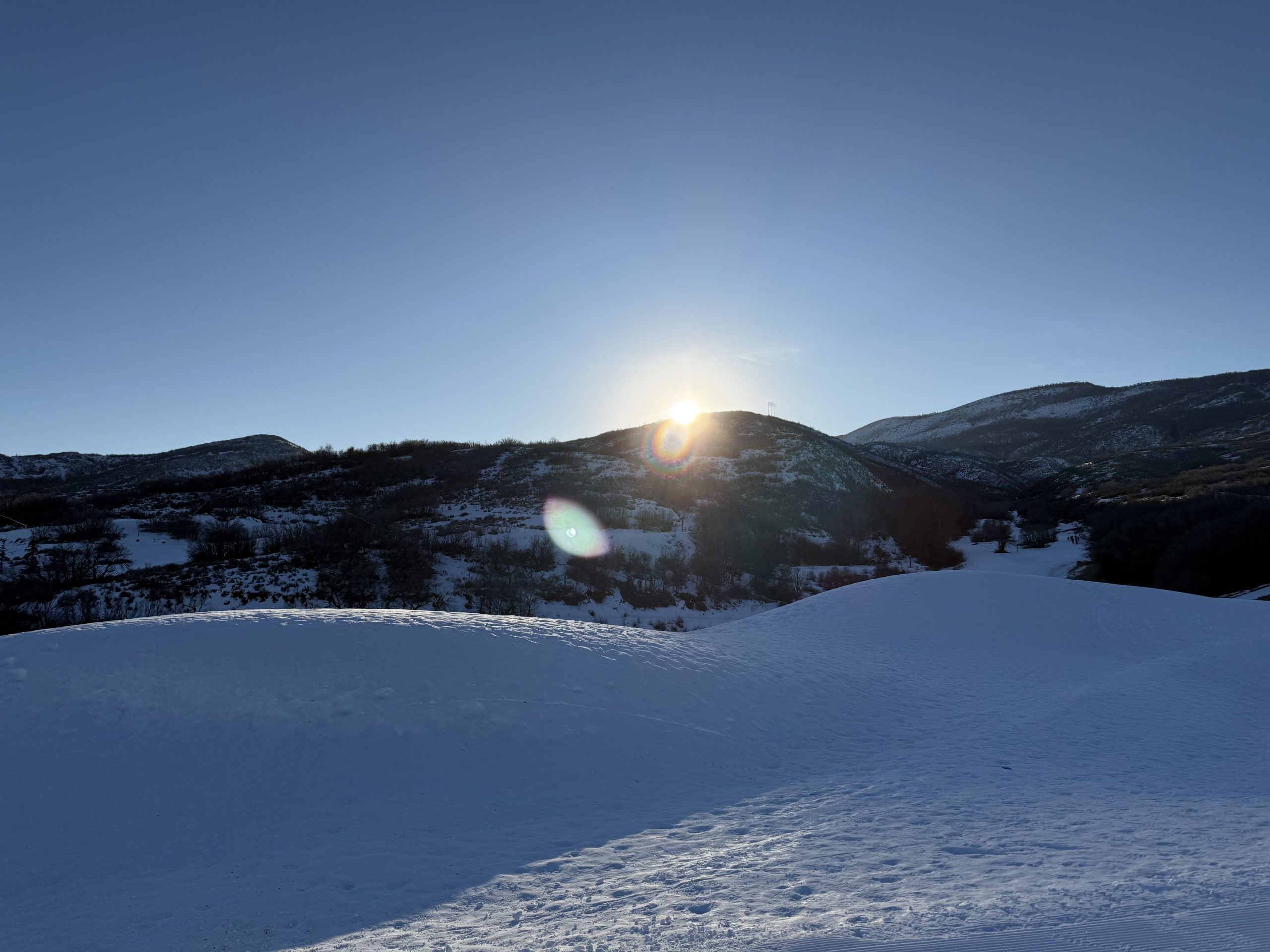
    Since that time, I’ve been fortunate to travel throughout the U.S. for work, and my collection of sunrises and sunsets has grown. I plan to share my favorite here, along with some poems that they’ve inspired. This most recent one is from Midway, Utah:

    Soft light on hard snow
    Gloves warm hands
    Laughter warms hearts
    Midway, Utah (Jan, 2025)

  • Storytelling for Teen Mental Health, College Success, and Community

    Storytelling for Teen Mental Health, College Success, and Community

    Did you know that storytelling can support teens in improved mental health and academic success? I was honored to speak to a small but passionate group of caring Montessorians at the Utah Montessori Conference this weekend in Salt Lake City about this important subject. I’ll recap our conversation briefly here.

    As we reflected on the disturbing facts that more than 30 percent of teens have an anxiety disorder, 20 percent of teens will experience depression by age 17, and suicide is the fourth leading cause of death in teens, we were inspired by the science that shows storytelling has incredibly protective and healing effects on teens and adults. We also discussed how helping tweens and teens learn to share and write their personal stories early and often prepares them for writing powerful college essays. We talked about how personal internal stories shape teens’ (and our) decisions and teens’ (and our) actions. Using Inquiry Based Stress Reduction can be a powerful tool to turn any internal negative stories into empowering ones.

    Finally, we discussed how storytelling creates peaceful, connected communities. By the end of our time together, sharing our stories, I felt a little happier, more hopeful, and more peaceful surrounded by these committed, good-hearted people. Find some people. Share your stories. Encourage young people in your life to do the same. You — and they — will be glad you did.

    In honor of the child,
    Dana
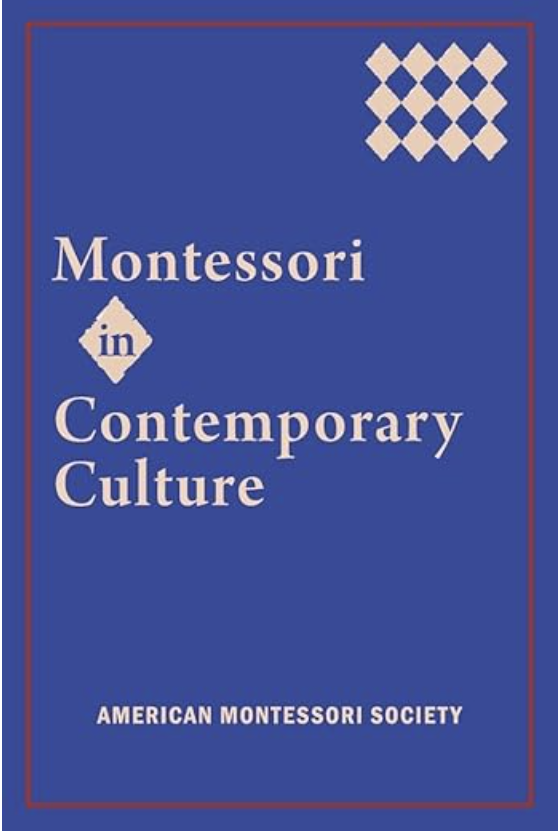
  • New Book! Montessori in Contemporary Culture

    New Book! Montessori in Contemporary Culture

    I’m proud to be a contributor to the American Montessori Society’s new anthology featuring the work of thought leaders in the AMS community on the most pressing issues of our time.

    Working alongside Dr. Elizabeth Park, Seth Johnson, and Zhoujing Zhang was an absolute pleasure. Check out our chapter Philosophical Underpinnings for the Incorporation of Digital Citizenship in Montessori Environments to find out why Digital Citzienship is fully aligned with Montessori philosophy, and why I am so passionate about supporting all schools in incorporating DC at every level!

  • Good Food = Good Behavior

    Maria Montessori was clear in her writing about adolescent development that it’s critical for adults to nurture the tweens and teens in our care in similar ways to which we cared for them at the toddler stage – including making sure they eat an abundance of healthy foods.

    “The physical care must include special attention to the physiological condition of adolescence. This is a time of crisis during which all the glands of internal secretion are affected, and, through them, the whole organism. The body is growing rapidly, but not at a uniform rate and this results in a disturbance of functional equilibrium.” From Childhood to Adolescence, pg. 73

    Adolescents are not only social newborns, their rapidly changing brains and bodies are very much entering another nearly newborn-like stage with ever-changing body dimensions, hormones, and brain development. Would we give a toddler caffeinated sodas, chips, fast food, and candy and expect them to grow well and thrive? No. 

    Then why are these foods the basis of many tweens and teens diets today?

    I recently watched a video in which nutrition expert Dr. Mark Hyman asserts that food is the most powerful intervention for mental health and behavior. Indeed, it’s reported that replacing junk foods with whole foods reduces violence in juvenile detention centers by 91 percent. Suicide, which is often listed as the second or third leading cause of death in adolescents, dropped to zero. 

    According to an article in the Journal of Nutrition and Health, disaffected young people “often have limited routine access to healthy foods and make poor food choices.” The article goes on to state that “poor diet may be a modifiable causal factor in antisocial behaviors.” While it also suggests more research must be done, it’s hard to see the downsides of supporting better nutrition for all adolescents, especially those struggling with making good choices and mental health. “The only risk is better health,” writes the journal article’s author.

    As far back as 1948 – long before highly processed foods, caffeinated drinks, and fast food chains – Dr. Montessori implored adults to give “special attention” to the diets of tweens and teens. She offers specific dietary guidelines – some of which may seem unconventional today while much of it would align even with our modern dietary guidelines. Some of her suggestions – such as feeding adolescents only farm-fresh produce and the total elimination of meat from their diets – would elevate nutritional guidelines even beyond today’s standards. 

    Like most things the inspired educator said, I think she was onto something.

    We know too many kids and adolescents today are struggling mentally, emotionally and physically. They need higher quality food to fuel their brains for learning, to regulate their emotions for healthier social connections, to optimize their rest, and to just feel stronger and healthier in their bodies. I’ve seen food choices affect many of my students, my own children, and myself on days that I am not as careful as I should be about my own diet. 

    One of my top goals throughout the next few years is to dig into how the body-brain connection affects teaching, learning and emotions, and how we can support ourselves and our students in making better food choices. Of course, this must be done in non-shaming, non-blaming, helpful ways, so we’re all intrinsically motivated to learn better and feel better each and every day. 

    I hope you’ll share what you know and come along on this learning journey with me. Let’s identify solutions and try some strategies for our students and ourselves.

    In honor of the child,
    Dana